
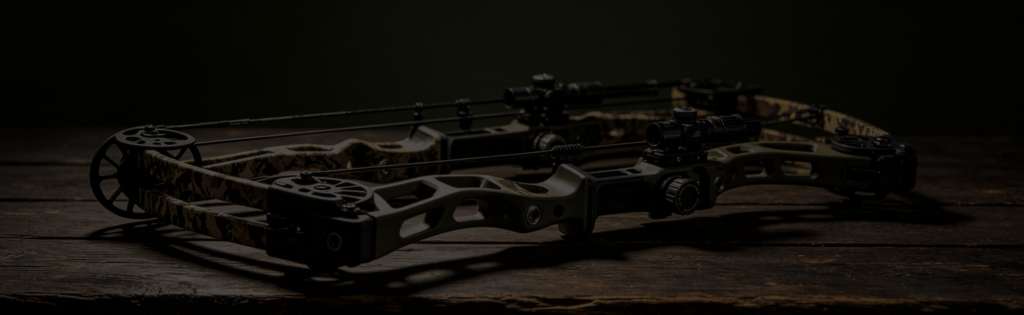
You need a left-handed compound bow if your left eye is dominant – even if you are right-handed. A left-handed bow is held in the right hand and drawn with the left, and its rest, sight, and quiver mount for left-eye aiming. Test your eye dominance first (it overrides handedness for most archers) – and note that if you are left-handed, research puts you closer to a coin flip than a certainty on which eye is actually dominant. Once you know, choosing a lefty bow is the same as choosing any compound: fit your draw length, pick a controllable draw weight, and prioritize adjustability.
Fletchwise guides are independent and hype-free – we are not sponsored by any archery brand.
Eye Dominance Decides, Not Your Hands
In archery you aim with your dominant eye, so the bow hand and draw hand are set by which eye is dominant – not by whether you write left or right handed. A left-eye-dominant person generally shoots a left-handed bow (held in the right hand, drawn with the left) so the dominant eye lines up behind the string. Cross-dominance (right-handed but left-eye-dominant, or vice versa) is common, which is why testing matters.
How to Test Eye Dominance
- Extend both arms and form a small triangle between your hands.
- With both eyes open, center a distant object in the triangle.
- Close one eye, then the other.
- The eye that keeps the object centered is your dominant eye – match the bow to it.
If You're Left-Handed, You're Roughly a Coin Flip on Which Eye Is Dominant
This is the part most “lefty bow” pages skip, and it flips the question this page is named for. Eye dominance and hand dominance are controlled by different, largely independent wiring, and the correlation between them is much weaker for left-handers than most people assume. Studies on the link between handedness and eye dominance put right-handers at roughly 67% right-eye dominant – a fairly strong match. Left-handers, by contrast, come out closer to 40% left-eye dominant, meaning the majority of left-handed people are actually right-eye dominant.
In plain terms: if you are left-handed and searching for a left-handed bow because that feels like the obvious match, the numbers say you are more likely than not to actually need a right-handed bow once you test your eye. This is exactly why the test in the previous section is not a formality – for a right-handed archer it mostly confirms what they assumed; for a left-handed archer it is a genuine coin-flip result that decides which bow (and which entire set of accessories) to buy.
Why You Can't Just Flip a Right-Handed Bow to Shoot Left
Unlike a recurve riser that can sometimes accept limbs either way, a compound bow’s cams and cable routing are handed parts, not symmetrical ones – the cam geometry, cable guard offset, and riser grip angle are built as true mirror images for each hand, not a single part that flips. That is why you cannot restring or re-mount a standard right-handed compound into a left-handed one; the small number of bows advertised as convertible achieve it with a specific reversible cam-pocket design, and it is a feature of that model, not something you can do to an arbitrary bow. The one workaround archers do use in a pinch is shooting a right-handed bow left-handed “backwards” (bow arm and draw arm swapped from the manufacturer’s intent) – workable with a fall-away rest, but riskier with the rest arm swinging toward the bow hand, and not how the bow was tuned to be shot.
This handed-parts requirement is also the real reason lefty bows are harder to find, not just retailer bias: every left-handed model needs its own cam tooling and a smaller production run against lower predicted demand, so manufacturers offer fewer left-hand SKUs and carry less lefty stock of rests, sights, and quivers. Confirm all of those come in left-hand versions before you commit, and expect a shallower used-market selection too – and the trade cuts both ways. If you sell a left-handed bow later, the same small buyer pool that made it hard to find used now makes it harder to find a buyer, and lefty listings commonly move for less relative to their original price than an equivalent right-handed bow. Our buying a used compound bow guide covers the inspection checklist either way.
Once you know which hand you actually need, picking the bow itself is no different from any other compound: an adjustable draw-length range that fits you, a draw weight you can pull smoothly, and good forgiveness matter far more than the handedness label.
Hands-on left-handed bow picks are coming as our shop launches. For now, confirm your eye dominance, then apply the same fit-first approach as any compound bow.
Frequently Asked Questions
Not necessarily – it depends on your dominant eye. If your left eye is dominant, you shoot a left-handed bow even if you are right-handed. Test your eye dominance before buying.
It is the mirror image of a right-handed bow: held in the right hand, drawn with the left, with the rest, sight, and quiver mounted for left-eye aiming. The specs and how you choose it are otherwise identical.
Cross-dominance (handedness and eye dominance on opposite sides) is common. Most archers go with their dominant eye for aiming. Some beginners instead close or patch the dominant eye, but matching the bow to your dominant eye is usually simplest.
They are less common, so selection can be smaller and stock tighter. This is not just a stocking choice – cams, cable routing, and grip angle are handed parts that need separate tooling, so manufacturers run fewer left-hand SKUs and dealers stock less lefty inventory across bows, rests, sights, and quivers. Confirm every part you want is available in left-hand versions before committing.
Not necessarily, and it is closer to a coin flip than most people expect. Studies on handedness and eye dominance find right-handers are roughly 67% right-eye dominant, but left-handers come out closer to 40% left-eye dominant – meaning most left-handed people are actually right-eye dominant and need a right-handed bow. Test your eye dominance before assuming.
Not on a standard bow. The cams, cable routing, and grip angle are manufactured as handed, mirror-image parts, not a single part that flips – restringing or re-mounting will not convert it. A small number of models are built with a specific reversible cam-pocket design that allows conversion, but that is a feature of that bow, not something you can retrofit onto an arbitrary one. Shooting a right-handed bow “backwards” is possible in a pinch with a fall-away rest, but it is riskier and not how the bow was tuned to be shot.
Yes, and it is the flip side of the same buying problem. The small pool of left-handed archers that makes lefty bows harder to find used also makes them harder to sell used – listings commonly move for less relative to their original price than an equivalent right-handed bow. Budget for that when deciding how much to spend new, and check the used-bow checklist either way before buying secondhand.
Submit the Form to Get Our Product Catalog
What We Can Offer
- ✅ Low MOQ – from 1 piece, no minimum order
- ✅ Full customization – names, initials, club crests & team logos
- ✅ Mockup before production – see it before we make it
- ✅ Production time about 2 weeks after mockup approval
- ✅ Free remake on defects within 14 days of delivery
We reply to every inquiry within 1 business day.
Email: [email protected]
WhatsApp: +1 770 157 5807
Keep Reading
Best for Beginners
Why target panic is largely a gear choice, and the fit and adjustability checklist for a first bow.
Best for BeginnersCompound Bows Guide
How let-off, cam type and axle-to-axle actually work, and every spec worth caring about before you buy.
Compound Bows GuideArchery Bows Guide
Recurve sizing, ILF vs proprietary limb fittings, and why a 25 lb bow can feel harder to hold than 40.
Archery Bows Guide