
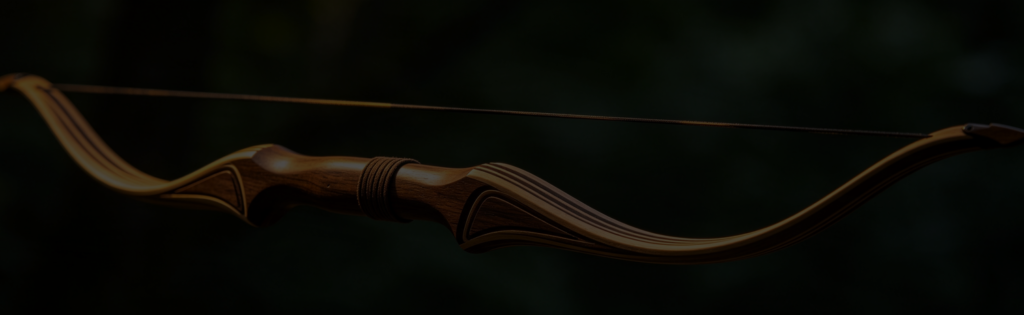
A horse bow is a short, recurved traditional bow originally designed to be shot from horseback. Because riders needed a compact, fast bow, horse bows are much shorter than longbows but store a lot of energy thanks to their deeply curved limbs. Famous styles include the Mongolian, Hungarian, Scythian, and Turkish bows. They are shot instinctively (without sights), which takes practice, but they are light, fast, and historically rich – ideal for traditional archers who want something different from a longbow or recurve.
Fletchwise guides are independent and hype-free – we are not sponsored by any archery brand.
What Is a Horse Bow?
A horse bow (also called a horsebow or nomad bow) is a short composite or laminated bow with strongly recurved limbs. The short length was a practical necessity: a mounted archer could not swing a tall longbow around a horse’s neck, so steppe cultures developed compact bows that still delivered serious power and speed. Modern horse bows keep that short, fast profile but are usually made from fiberglass and wood laminates rather than traditional horn, sinew, and wood.
A Brief History
Horse bows shaped history across the Eurasian steppe. The Scythians, Huns, Mongols, Hungarians, and Turks all built mounted archery cultures around them. The Mongol Empire’s lightning conquests owed much to horse archers who could loose arrows accurately at a gallop. Each culture developed its own profile, which is why you will see bows sold today as “Mongolian,” “Hungarian,” “Scythian,” or “Turkish” styles – each a nod to a historical design.
How a Horse Bow Shoots
Compared with a longbow or modern recurve, a horse bow feels lively and quick in the hand. The deep recurve stores energy efficiently for the bow’s short length, giving a fast cast. Most horse bows are shot instinctively – without sights – often using a thumb draw with a thumb ring, the traditional steppe technique, although many Western archers shoot them with a standard three-finger Mediterranean draw. The short limbs create a sharper string angle at full draw, which is one reason instinctive aiming and consistent form matter so much.
Why a Short Bow Can Match a Longbow's Power: the Siyahs
"Recurved limbs store more energy" explains part of the horse bow’s power, but not why a bow barely half the length of a longbow can approach or match it. The other half of the answer is the siyahs – the rigid, non-bending tip sections at the end of each limb.
A horse bow’s limb is not uniformly flexible along its whole length. Only the inner portion, closest to the grip, actually bends and stores energy; the siyahs beyond that stay stiff and act as levers. When you draw the bow, those rigid tips lever the string back further and load the flexing part of the limb harder than the same length of purely flexible limb could manage on its own – trading a small amount of added tip mass for a longer effective draw and more stored energy from a short overall package. Rigid tips like this appear in the archaeological record as far back as roughly the 3rd century BCE, marking the shift from simple curved bows to this hybrid lever design – and it is the reason composite horse bows historically reached draw weights up in the range that would be extraordinary for a stave of the same length without them.
Stringing a Horse Bow Is Not Like Stringing a Straight-Limbed Bow
The same deep recurve and siyah lever tips that make a horse bow powerful for its size also mean the limbs are under tension even when the bow is unstrung, unlike a longbow or straight-limbed recurve, which sits relaxed until you string it. Forcing that tension the wrong way during stringing is one of the more common ways a horse bow gets damaged, and it happens at setup, not on the shooting line.
The traditional “step-through” method – bracing the bow against a shin and thigh and bending it with body weight – works, but it demands controlled technique: sudden or uneven pressure can twist, crack, or snap a limb, and composite or horn-and-sinew bows are more vulnerable to this than fiberglass-laminate versions. A bow stringer tool removes most of the guesswork and risk, and is worth the small cost for anyone not already confident with the step-through method by feel.
How to Choose a Horse Bow
- Pick a draw weight you can control. As with any traditional bow, start lighter (around 25-35 lbs) to build clean form before moving up.
- Choose a style. Mongolian, Hungarian, Scythian, and Turkish profiles differ mostly in limb shape and grip feel – handle a few if you can.
- Match your draw length. Short bows are sensitive to overdrawing; confirm the bow suits your draw length.
- Decide on draw technique. If you want the authentic thumb draw, get a thumb ring and learn the technique; otherwise a finger tab works.
- Buy good traditional arrows. Wood or properly spined carbon arrows matched to the bow’s weight fly best from a horse bow.
Why Thumb Draw, Specifically
Thumb draw usually gets described as the authentic steppe technique and left there, as if the choice were purely cultural. It also solves two real, physical problems that a short bow creates – problems a longbow does not have.
- Finger pinch from the sharp string angle. A horse bow’s short length means the string meets your fingers at a steeper angle at full draw than on a longbow. Pulled with the standard three-finger Mediterranean draw, that steep angle pinches noticeably; hooking the string with just the thumb avoids it, because only one digit needs to wrap the string rather than three fingers closing around it at that angle.
- Control on a moving horse. With a finger draw, the arrow tends to work loose off the bow-hand knuckle the moment the horse picks up speed. A thumb draw, combined with a thumb ring, holds the string and manages the release with a more secure, compact grip that stays put through the jolt of a gallop – which is exactly the condition the technique was developed for.
None of that makes the Mediterranean draw wrong for a horse bow shot from standing on the ground – it works fine there, and plenty of Western archers use it. But if you plan to shoot from horseback, or just want to understand why the steppe cultures standardized on the thumb ring rather than treating it as a stylistic footnote, this is the actual mechanism.
Who Should Shoot a Horse Bow?
Horse bows suit archers drawn to history, instinctive shooting, and a light, fast traditional bow that is easy to carry. They are not the easiest bows to shoot accurately at first – there are no sights and the short limbs are less forgiving – so they reward practice. If you want a simpler traditional start, a recurve may be easier; if you want raw power and precision, see compound bows.
Frequently Asked Questions
Historically, horse bows were used for mounted warfare and hunting from horseback. Today they are used for traditional and instinctive target archery, historical reenactment, and modern horseback archery competitions.
They can be, but they are shot instinctively without sights and have short, less-forgiving limbs, so they take more practice than a recurve. Beginners who love the history and instinctive style can absolutely start on one – just begin with a light draw weight.
A horse bow is a short, traditional recurved bow meant for shooting from horseback and is shot instinctively. A modern Olympic-style recurve is longer, often a takedown, and is typically shot with a sight. Both use recurved limbs, but they differ in length, technique, and intended use.
Most horse bows have no sights, so archers aim instinctively – focusing on the target and letting practice guide the shot – often using a thumb draw with a thumb ring. Consistent form and lots of repetition are the keys to accuracy.
Mostly the siyahs – the rigid, non-bending tip sections at the end of each limb. Only the inner part of the limb actually flexes; the stiff tips act as levers that load that flexing section harder and effectively lengthen the draw, storing more energy than a purely flexible limb of the same overall length could manage. That lever design, dating back roughly to the 3rd century BCE, is why composite horse bows historically reached draw weights that would be unusual for a plain curved stave of the same size.
Two practical reasons, not just tradition. A short bow’s steeper string angle at full draw pinches fingers noticeably under a three-finger draw, which a thumb ring avoids since only the thumb hooks the string. And with a finger draw, the arrow tends to work loose off the bow-hand knuckle once a horse picks up speed – a thumb draw holds a more secure, compact grip through that motion, which is exactly the condition it was developed for.
It can be, but it takes real technique – a horse bow’s deep recurve means the limbs carry tension even unstrung, so forcing that tension unevenly during stringing is a common way the bow gets damaged, usually at setup rather than on the shooting line. The traditional step-through method (bracing the bow against a shin and thigh) works in experienced hands, but sudden or uneven pressure can twist or crack a limb, especially on composite or horn-and-sinew bows. A bow stringer tool removes most of that risk and is worth using until you are confident with the technique.
Submit the Form to Get Our Product Catalog
What We Can Offer
- ✅ Low MOQ – from 1 piece, no minimum order
- ✅ Full customization – names, initials, club crests & team logos
- ✅ Mockup before production – see it before we make it
- ✅ Production time about 2 weeks after mockup approval
- ✅ Free remake on defects within 14 days of delivery
We reply to every inquiry within 1 business day.
Email: [email protected]
WhatsApp: +1 770 157 5807
Keep Reading
Types of Archery Bows
Recurve, compound, longbow and crossbow compared side by side so you can pick the right style, not just the popular one.
Types of Archery BowsArchery Bows: Full Guide
Recurve sizing, ILF vs proprietary limb fittings, and why a 25 lb bow can feel harder to hold than 40.
Archery Bows: Full GuideArchery Targets Guide
All four target types compared – bag, foam, layered and 3D – matched to your draw weight and broadhead use.
Archery Targets Guide