The recurve is the Olympic bow, the club loaner, and the one almost every archer learns on. This guide covers what makes a recurve a recurve, how to size one to your body, how much draw weight you actually need – and the one buying decision that determines whether your first bow is also your last.
Quick answer
A recurve bow has limb tips that curve away from the archer, which stores more energy than a straight-limbed longbow of the same length. It is the only bow style shot in the Olympics and the standard first bow for most beginners. Size it by draw length: a 25-27 inch draw wants a 66 inch bow, 27-29 inches wants 68, and 29 inches or more wants 70. For draw weight, most adults should start at 20-30 lbs for target practice – and if you plan to hunt, check your state minimum, which is commonly 40 lbs and never lower than 30. Buy a takedown with ILF fittings if you can: it is the difference between upgrading limbs later and buying a whole new bow.
Fletchwise guides are independent and hype-free – we are not sponsored by any archery brand.
What Makes a Bow a Recurve
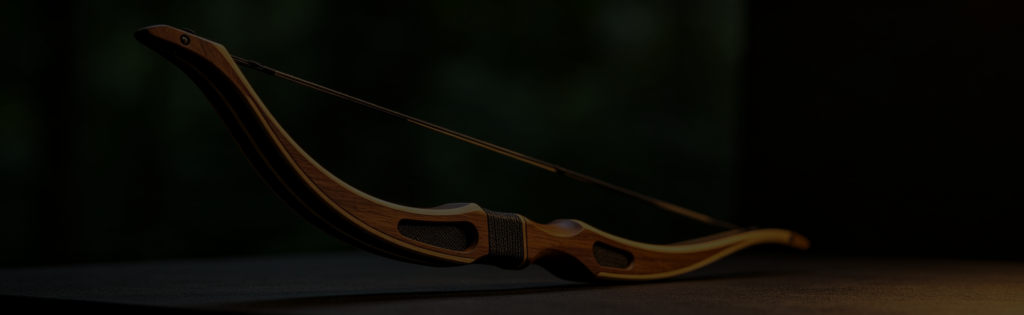
Look at the limb tips. On a recurve they bend back away from the archer; on a longbow they carry on in the same gentle arc. That reverse curve is not decoration. It lets the limbs store more energy over the same draw and keeps the string in contact with the limb for longer on release, so a recurve throws an arrow faster than a longbow of equal length and draw weight.
The design is ancient – the curved tip appears on Egyptian bows thousands of years ago – but the reason it dominates modern ranges is practical: it is short enough to handle, powerful enough to be competitive, and simple enough that nothing on it can go out of tune the way a cam system can. It is also the only bow style permitted in Olympic competition, which is why virtually every club in the world teaches on one.
If you are still deciding between styles rather than shopping for a recurve, start with the bow types comparison instead.
Takedown or One-Piece
A one-piece recurve is a single continuous bow. Nothing to loosen, nothing to rattle, and many traditional shooters prefer how it feels. What you give up is adjustability: the draw weight it came with is the draw weight it will always have.
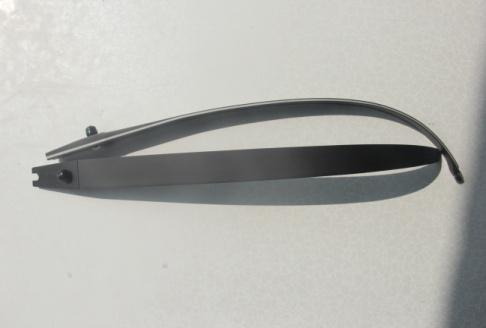
A takedown recurve separates into three pieces – riser and two limbs – and this is what nearly every modern target recurve is. It fits in a case, it travels, and most importantly the limbs unbolt. When 25 lbs stops feeling like enough, you buy limbs, not a bow.
For a first purchase this matters more than almost any other spec. Beginners consistently outgrow their starting draw weight within a year, and a takedown turns that from a $200 problem into a $90 one.
The Three Parts
Riser
The middle section you hold. Most target risers are machined aluminium; traditional ones are laminated wood; high-end competition risers are carbon. Aluminium is the sensible default – stable, affordable, and heavy enough to steady the bow without being a burden. Wood is warmer to hold and quieter, carbon damps vibration best and costs the most.
Limbs
The two working halves, and the part that actually determines draw weight. Entry limbs are fibreglass over a wood core; better limbs use carbon and foam, which store energy more efficiently and recover faster. Limbs are the correct thing to spend money on once your form is solid, and the correct thing not to spend money on before that.
String
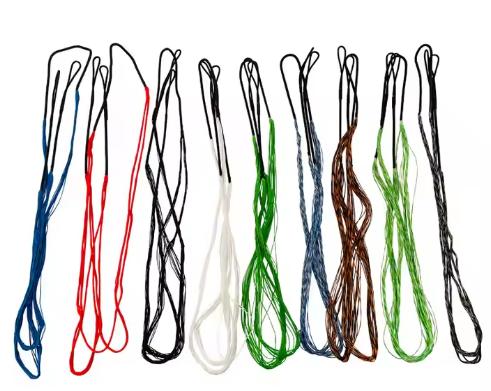
The consumable. Strings are sold by the bow’s AMO length rather than by the string’s own measurement – a string labelled for a 68 inch bow is physically shorter than 68 inches, so buy by your bow length and ignore the tape measure. Replace it when the serving frays or the strands look furred.
Brace Height Is a Tuning Knob, Not a Set-and-Forget Number
Brace height – the distance from the string to the deepest part of the grip at rest – gets treated like a fixed spec on the box. It is not. You adjust it yourself, by twisting the string, and it is the main tuning control a recurve actually gives you.
More twists shorten the string, which pulls the limb tips back and raises brace height; fewer twists lowers it. As a working rule, two full twists move brace height about a quarter inch – small, deliberate adjustments, not a full re-twist every time.
| Brace height | What actually happens |
|---|---|
| Too high | Quieter and safe for the bow, but the limbs stop short of their full travel and you lose stored energy – a slower arrow for the same draw weight. |
| Too low | Can add a little speed, but brings noise, poor arrow flight, and in the worst case is hard enough on the limbs to damage the bow – this is the direction that actually carries risk. |
Manufacturers publish a brace height range rather than one number precisely because the right setting also depends on your string material and the limbs’ own tolerances – the range is the starting point, not the destination. Twist toward the middle of it first. If the shot suddenly gets loud, or noticeably quieter than usual, that is your string telling you the brace height drifted – check it before you blame the arrows or your form.
Why a Recurve Wants a Weaker Arrow Than a Compound at the Same Draw Weight
Buy a spine chart and it will ask which bow type you shoot before it asks your draw weight – and the reason is one most retail pages skip past. At an identical draw weight, a recurve needs a weaker (higher-number) spine than a compound. The bow does not care about the number; the arrow has to bend around a problem the compound mostly does not have.
Release a recurve with fingers and the string does not come straight back – it rolls slightly sideways off the fingertips as it releases, and the arrow itself starts bent around the riser at full draw. That combined sideways-and-flex motion is the archer’s paradox: the arrow has to flex around the riser and straighten out in flight, and a finger release adds noticeably more of that sideways component than a mechanical one does.
A compound shooter uses a release aid that lets the string travel straight back, plus a drop-away or containment rest that manages the arrow through launch. Most of the sideways flex is engineered out, which is exactly why compound hunters can run thinner, stiffer arrows and still get forgiving flight. A recurve shooter has none of that hardware between the string and the fingers, so the paradox is left in – and the arrow has to be built softer to flex through it correctly rather than fight it.
The practical result: do not reuse a compound spine chart or a friend’s compound arrows on a recurve, even at the same marked draw weight. Use a chart built for finger-release recurve shooting, and if you later move between bow types, expect to re-spine rather than carry the same arrows over. The full mechanics of spine and point weight – including why cutting shafts is one-way – are covered in the broadheads and arrows guide.
What Size Recurve Do You Need
Bow length is set by your draw length, not your height, and it is the one measurement people most often get wrong. Bows are sold in AMO lengths – typically 62, 64, 66, 68, 70 and 72 inches.
| Your draw length | Bow length (AMO) | Typical archer |
|---|---|---|
| Up to 25" | 62–64" | Youth, smaller frames |
| 25–27" | 66" | Most adult women, shorter men |
| 27–29" | 68" | The most common adult size |
| 29" and over | 70"+ | Taller archers, long wingspans |
Going too short is the mistake that matters. A long draw on a short bow creates a sharp string angle at full draw, which pinches your fingers, stresses the limb tips, and quietly costs you accuracy. Going slightly long costs you nothing except a little extra bow to carry.
How Much Draw Weight
Almost everyone buys too much. Draw weight is measured at a 28 inch draw, so if your draw is shorter you are pulling less than the number on the limb, and if it is longer you are pulling more.
| Purpose | Draw weight | Notes |
|---|---|---|
| Learning form | 15–25 lbs | Light enough to hold at full draw and think. This is the point. |
| Adult target | 20–30 lbs to start | Work up with heavier limbs as your back muscles develop. |
| Hunting (check your state) | 40 lbs+ | 40 lbs is the most common legal minimum; some states set 35, a few 30. At 40 lbs with a recurve, use a heavy arrow and keep shots inside 20 yards. |
A useful sanity check: you should be able to draw and hold for several seconds without shaking, and shoot thirty arrows without your form falling apart. If you cannot, the bow is too heavy no matter what the label says. Buying for a young archer? See the youth bow guide for draw weight by age and height.
ILF or Proprietary - the Decision That Outlives the Bow
Every takedown recurve bolts its limbs on in one of two ways, and the difference barely gets mentioned on product pages.
ILF stands for International Limb Fitting – a shared standard, so an ILF riser takes ILF limbs from almost any manufacturer. You can change brand, weight, length or material without changing the bow. It is not a perfect guarantee, since some makers machine their fittings marginally differently, but in practice the ecosystem is enormous.
Proprietary fittings bolt on with a maker-specific system – the popular Galaxy Sage, for example, uses its own screw-in arrangement that only takes Sage limbs. Bows like this are usually a little cheaper, and for a lot of people they are a perfectly good first bow. But when you want stiffer limbs in two years, your options are whatever that one brand still makes.
What the starter package does not tell you
Almost every beginner is sold a complete proprietary-fitting bow, because a single boxed package is easier to sell than a riser and limbs chosen separately. It is not a scam – those bows shoot fine. But it quietly decides your next purchase for you. Spending a little more on an ILF riser now means that for the rest of your archery you replace limbs, not bows. If you are reasonably sure you will still be shooting in two years, that is the single highest-value choice on this page.
Barebow or Olympic Setup
The same recurve can be shot two ways. Barebow means riser, limbs, string and nothing else – you aim by instinct or by using the arrow point as a reference. Olympic recurve adds a sight, a clicker, a plunger and a long stabiliser rod, and is what you see at the Games.
Neither is more legitimate, and you do not have to decide on day one – a bare riser will accept sights and stabiliser bushings later. Start barebow, learn to aim with your body, and add hardware when you know what problem you are solving. Once you get there, the bow accessories guide covers what each piece actually does.
What It Actually Costs
The bow is not the budget. A realistic first setup is the bow itself, half a dozen arrows matched to your draw weight, a target you can shoot into safely, an arm guard, and a finger tab. Add a stringer – stringing a recurve by stepping through it is how limbs get twisted and people get hurt.
Budget for arrows properly. Cheap arrows with the wrong spine will make a good bow look bad and send you chasing form problems that are actually equipment problems.
Not sure a recurve is the right first bow at all? Our archery bows for beginners guide covers why most instructors start everyone here regardless of what they eventually want to shoot. And if you would rather have the shopping done for you once you know your size and budget, best archery bows rounds up picks by the same fit-first logic as this page.
Frequently Asked Questions
What size recurve bow do I need?
Size by draw length, not height. A 25-27 inch draw takes a 66 inch bow, 27-29 inches takes 68, and 29 inches or more takes 70 or longer. Shorter draws use 62-64 inch bows. Erring slightly long is harmless; erring short pinches your fingers and costs accuracy.
What draw weight should a beginner start with?
Most adults should start at 20-30 lbs, and 15-25 lbs is better still if your only goal is learning form. You should be able to hold at full draw without shaking and shoot thirty arrows without your technique collapsing. A takedown lets you buy heavier limbs later instead of a new bow.
Can you hunt with a recurve bow?
Yes, but check your state’s legal minimum draw weight first. Forty pounds is the most common requirement, several states set 35, and a couple allow 30. At the 40 lb end, pair it with a heavy arrow and keep shots inside about 20 yards.
What does ILF mean on a recurve bow?
International Limb Fitting – a shared standard that lets you bolt limbs from one manufacturer onto a riser from another. The alternative is a proprietary fitting that only takes that brand’s limbs. ILF costs a little more up front and saves you buying a whole new bow when you want to change draw weight.
Is a recurve harder to shoot than a compound?
Harder to shoot accurately, yes. A compound lets off most of the draw weight at full draw so you can hold and aim; a recurve holds full weight the whole time. That is also why recurves teach form better – there is nothing mechanical to hide behind. See the compound bow guide for the other side.
Takedown or one-piece recurve?
Takedown for almost everyone. It travels in a case, and the limbs unbolt so you can raise draw weight without replacing the bow. One-piece recurves are quieter and preferred by many traditional shooters, but the weight you buy is the weight you keep.
Can I use compound bow arrows on my recurve?
Not safely assumed, even at the same marked draw weight. A recurve needs a weaker, higher-number spine than a compound because a finger release rolls the string sideways and the arrow has to flex around the riser without a mechanical release or rest managing it – the archer’s paradox. Use a spine chart built for finger-release recurve shooting rather than reusing compound arrows or a compound chart.
How do I adjust brace height on a recurve?
By twisting the string – more twists shorten it and raise brace height, fewer twists lowers it, and roughly two full twists move it about a quarter inch. Stay inside the manufacturer’s published range. Too high costs you speed but is safe; too low can add noise, spoil arrow flight, and in the worst case stress the limbs enough to damage the bow, so treat “too low” as the direction to be cautious about.
Submit the Form to Get Our Product Catalog
What We Can Offer
- ✅ Low MOQ – from 1 piece, no minimum order
- ✅ Full customization – names, initials, club crests & team logos
- ✅ Mockup before production – see it before we make it
- ✅ Production time about 2 weeks after mockup approval
- ✅ Free remake on defects within 14 days of delivery
We reply to every inquiry within 1 business day.
Email: [email protected]
WhatsApp: +1 770 157 5807
Keep Reading
Compare Bow Types
Recurve, compound, longbow and crossbow compared side by side so you can pick the right style, not just the popular one.
Compare Bow TypesHorse Bow
What separates a real horse bow from a marketing label, and the draw style that makes it work.
Horse BowBow Accessories
The order you buy accessories in decides what you pay twice for – draw length first, stabilizer last.
Bow Accessories