
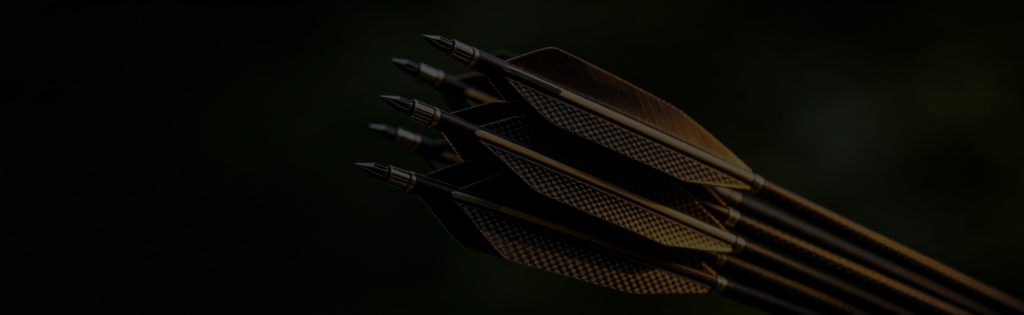
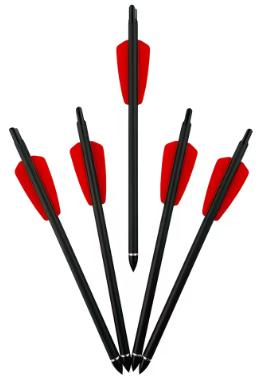
Carbon arrows are made from carbon fiber wrapped into a hollow shaft – light, very strong, and consistent shot to shot, which is why they dominate modern target and hunting archery. To choose one, match the spine (stiffness) to your draw weight and arrow length using the maker’s spine chart, pick a total weight based on speed vs penetration, and look for a tight straightness tolerance (lower is better, e.g. .003″). Carbon outperforms aluminum for most archers; aluminum is cheaper, wood is for traditional bows.
Fletchwise guides are independent and hype-free – we are not sponsored by any archery brand.
Why Carbon Took Over
Carbon arrows combine a high strength-to-weight ratio with excellent consistency. They are light enough to fly fast and flat, strong enough to survive repeated shots, and they do not permanently bend like aluminum – a carbon shaft is either good or broken, never subtly tweaked. That consistency is what makes them the standard for everything from Olympic recurve to bowhunting.
The One Downside That Matters: Carbon Fails Without Warning
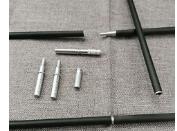
Aluminum and carbon fail in completely different ways, and the difference is what makes carbon arrow inspection a safety discipline rather than a glance. Aluminum is ductile: when it takes more stress than it can handle, it bends or dents, and you can see it immediately — the arrow effectively tells you it is done. Carbon is brittle: as a composite of fibres in resin, it can suffer internal delamination, micro-fractures or resin cracks that are invisible from the outside, and the first sign of the damage is sometimes the shaft coming apart on release — driving carbon splinters into your bow hand.
That is not a reason to avoid carbon; it is a reason to inspect it properly before every session. The procedure takes about a minute per arrow and it catches almost everything:
- Flex test along the full length. Bend the shaft firmly with both hands and work your way from tip to nock, rotating as you go. Any crackling, creaking or crunching sound is internal damage — retire the shaft.
- Feel for soft spots. A section of the shaft that bends more easily than the rest, or feels mushy under pressure, has lost structural integrity.
- Tap test. Lightly tap along the shaft with something hard — a clear, high-pitched ring means the structure is continuous; a dull thud means something inside has separated.
- Look for spiderweb patterns. Fine white stress marks near the nock end or point, particularly after grouping tight and hitting nock-to-nock, are resin matrix fractures — not just surface scratches. If they wipe off, it was target foam residue; if they do not, the shaft is compromised.
Most damage starts at the nock end from arrows hitting each other in the target, not at the point. The universal rule with carbon: if the flex test gives you anything other than silence and a smooth, even bend, the shaft is done. A replacement arrow costs a fraction of a hospital visit.
Heat, Not Cold, Is the Real Storage Threat
Cold does very little to a carbon shaft on its own – the fiber and resin are stable across ordinary winter temperatures, and hunters worry about it far more than the material justifies. What actually degrades a carbon arrow over time is heat: prolonged sun and high temperatures, such as a quiver baking on a truck dashboard or in a closed vehicle all season, can soften the resin bond and warp vanes and fletching glue long before the carbon fiber itself is affected.
Stored out of direct sun and away from sustained heat, a carbon shaft is close to permanent – the material does not fatigue or degrade with age the way it can with impact stress. The flex and tap tests above catch impact damage; for heat exposure, check that fletching and inserts are still bonded tight and that vanes have not warped or lifted, since those glue joints fail well before the shaft itself does.
How to Choose Carbon Arrows
Spine (Stiffness)
The most important spec. Spine is how much the shaft flexes, and it must match your draw weight and arrow length. Too stiff or too weak and the arrow will not recover cleanly off the string. Always use the manufacturer’s spine chart, which cross-references your draw weight, draw length, and point weight.
Weight (GPI)
Grains-per-inch sets total arrow weight. Lighter arrows fly faster and flatter (good for known-distance target); heavier arrows carry more energy, penetrate better, and are quieter (favoured by hunters). Many hunters aim for a balanced, slightly heavier arrow for penetration.
Straightness Tolerance
Carbon shafts are graded by how straight they are, such as .006″, .003″, or .001″. A lower number means a straighter, more consistent (and pricier) shaft. For hunting, .006″-.003″ is plenty; competitive target archers may want tighter.
Diameter
Standard-diameter shafts (~.246″) are versatile, affordable, and work with standard components. Micro-diameter shafts (~.204″ or .166″) cut cross-section area significantly, which reduces wind drift at longer ranges and penetrates better because a smaller hole loses less energy to friction through the target. The catches: they need specific nocks, inserts and bushings rather than standard parts, and they cost noticeably more per shaft. For most hunters at normal bowhunting distances, standard diameter is perfectly adequate — micro-diameter earns its premium when you shoot in wind or at longer ranges, and the difference inside 30 yards is hard to notice.
What You Actually Get at Each Price Tier
Carbon arrows are not one product at different markups. The price roughly tracks straightness tolerance, weight consistency and the quality of the carbon layup, and it is worth knowing what each band buys you:
- Budget (~$5-8 per shaft) — .006″ straightness, wider weight variance, perfectly adequate for practice, casual shooting and new archers. These will group better than you can shoot for a long time.
- Mid-range (~$8-14 per shaft) — .003″ straightness, tighter weight sorting, better component fit. This is the sweet spot for most hunters.
- Premium (~$14-25+ per shaft) — .001″ straightness, matched weight within a grain or two, micro-diameter available. For competitive target archers and hunters who want to remove every variable they can.
The honest advice: for hunting inside 40 yards, the budget-to-mid band is the sensible default. A .006″ shaft with the correct spine will out-shoot a .001″ shaft with the wrong spine every single time, and spine selection is worth far more of your attention than straightness tolerance is.
Carbon vs Aluminum vs Wood
| Material | Real strength | Real weakness | Best for |
|---|---|---|---|
| Carbon | Light, consistent, fast, no permanent bend | Hidden internal damage — fails without warning | Modern compound, Olympic recurve, hunting |
| Aluminum | Affordable, very straight, bends visibly when damaged | Bends permanently — there is no “slightly off” recovery | Indoor target, beginners, budget practice |
| Hybrid | Carbon core in aluminum jacket — tight tolerances, thin | Expensive, and still brittle at the carbon layer inside | Competitive target, long-range accuracy |
| Wood / bamboo | Authentic, traditional feel, quiet on the shelf | Inconsistent between shafts; grain and moisture affect flight | Traditional longbow, horse bow |
Aluminum is worth a second look in a few specific situations that get lost when the conversation jumps straight to carbon. Indoor target archers, where wind is irrelevant and a heavier, more forgiving shaft can help scoring, often prefer aluminum. Beginners on a shoestring who want a dozen straight arrows that they can inspect for bends at a glance get a real safety advantage. And anyone shooting a traditional bow off the shelf, where a slightly heavier arrow can be easier to tune, may prefer the feel.
That said, for most compounds and modern recurves, carbon wins — because the consistency from shaft to shaft, the lighter weight for a given spine, and the absence of a “slightly bent” failure mode that you might not spot in time all matter more than the upfront cost difference. The arrows for a compound bow guide covers matching spine to your specific setup; arrow rest selection matters too, since aluminum’s larger diameter interacts differently with containment rests.
Don't Forget the Setup
Carbon arrows must be cut to your draw length with a proper arrow saw (never a hacksaw), then fitted with the right inserts, points or broadheads, nocks, and fletching. Cutting changes effective spine, so cut to a chart and test before trimming further.
The insert bond is the second silent failure point, and it fails the same way the shaft does – invisibly. Two adhesives dominate: hot melt (heated glue that re-melts, so components can be swapped later) and epoxy (a permanent chemical bond). Hot melt absorbs shock and stays serviceable – a properly seated hot melt joint has held over 100 lb of pull force in bow-press pull tests. 24-hour epoxy sets up harder but more brittle, and repeated impacts can crack that bond over time – it is the right call only if you genuinely never plan to remove the insert.
Removal is where carbon punishes shortcuts. The resin matrix holding the fibers together starts breaking down above roughly 300°F – the same heat needed to reverse a hot-melt bond. Too little heat and you risk pulling shaft fibers out with the insert; too much and you delaminate the resin matrix around the joint, weakening the shaft itself in a way you cannot see afterward. Safer removal skips the torch: soak the insert end in acetone for up to 15 minutes to break the bond, or submerge it in boiling water for 15+ minutes, then extract with a snug-fitting rod. Whichever adhesive you use, clean the inside of the shaft with alcohol first – resin does not bond well to factory oil residue, and a weak bond fails exactly like the shaft itself does: silently, until it does not hold.
Frequently Asked Questions
For most archers, yes. Carbon is lighter, stronger, more consistent, and does not bend permanently the way aluminum does. Aluminum is cheaper and very straight, making it a reasonable budget or beginner option, but carbon is the modern standard.
Use the manufacturer’s spine chart, which matches your draw weight, draw length, and point weight to a spine value. Getting spine right is the single most important step for accurate arrow flight.
It is how straight the shaft is, shown as a number like .006″, .003″, or .001″ – lower is straighter and more consistent (and more expensive). For hunting, .006″-.003″ is plenty; competitive target shooters may prefer tighter tolerances.
Yes, with an abrasive arrow saw or a rotary tool with a cut-off disc – never a hacksaw, which splinters carbon. Wear a dust mask, cut square, and remember that shortening a shaft makes it behave stiffer.
Flex it firmly along the full length from tip to nock while rotating. Crackling, creaking or a mushy soft spot means internal damage — retire the shaft immediately. Also tap along it with something hard: a clear high ring is good, a dull thud means internal delamination. Look for fine white spiderweb marks near the nock end that do not wipe off (resin fractures, not surface scratches). Unlike aluminum, carbon hides damage; if the flex test gives you anything but silence and a smooth bend, the shaft is done.
Depends what you are buying. The price mostly tracks straightness tolerance — .006″ at ~$5-8 is fine for hunting and practice, .003″ at ~$8-14 is the sweet spot for most hunters, .001″ at ~$14-25+ matters for competitive target. But spine correctness matters far more than straightness tolerance: a .006″ shaft with the right spine will group better than a .001″ shaft with the wrong one, every time. Spend on getting spine exactly right before spending on tighter straightness.
Aluminum makes sense for indoor target (wind is irrelevant, a heavier shaft can be more forgiving), for beginners on a tight budget who get the safety advantage of visible bends over hidden cracks, and for traditional bows shot off the shelf where a heavier arrow can be easier to tune. For most compound and modern recurve shooters, carbon’s consistency and lighter weight for a given spine win out.
Cold is largely a non-issue – the carbon fiber and resin are stable across ordinary winter temperatures. Heat is the real threat: prolonged sun and high temperatures, such as a quiver left on a truck dashboard all season, can soften the resin bond and warp vanes and fletching glue well before the shaft itself is affected. Stored out of direct sun and sustained heat, a carbon shaft is close to permanent.
Hot melt if you want to swap points, inserts or broadheads later – it absorbs shock and re-melts with heat, and a good bond has held over 100 lb in pull tests. Epoxy sets harder but more brittle, and repeated impacts can crack it over time, so only use it if you are certain you will never need to remove that insert. Either way, clean the inside of the shaft with alcohol before gluing – oil residue is the most common reason a bond fails early, and reversing it later with too much heat can delaminate the shaft around the joint.
Submit the Form to Get Our Product Catalog
What We Can Offer
- ✅ Low MOQ – from 1 piece, no minimum order
- ✅ Full customization – names, initials, club crests & team logos
- ✅ Mockup before production – see it before we make it
- ✅ Production time about 2 weeks after mockup approval
- ✅ Free remake on defects within 14 days of delivery
We reply to every inquiry within 1 business day.
Email: [email protected]
WhatsApp: +1 770 157 5807
Keep Reading
Arrows & Broadheads Guide
Spine, grain weight and FOC explained as one system – and why cutting a shaft is the step you cannot undo.
Arrows & Broadheads GuideBroadheads Explained
Fixed vs mechanical broadheads, real recovery-rate data, and the cutting-diameter minimums that matter more than brand.
Broadheads ExplainedArrow Saws
Dust safety, squaring shafts to length, and what a dedicated arrow saw costs versus a cheap manual cutter.
Arrow Saws