
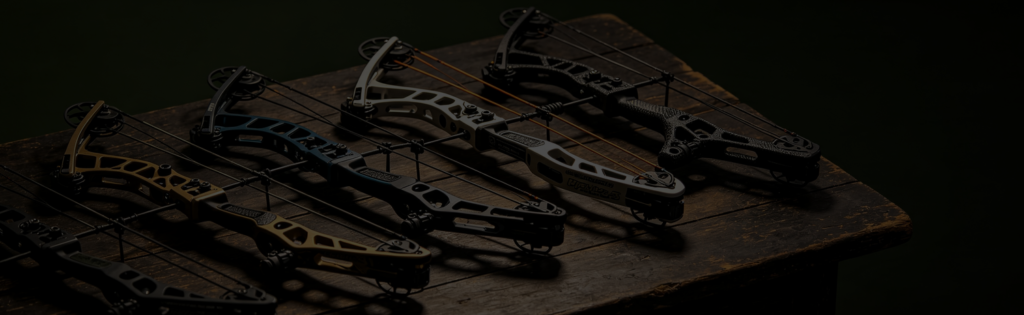
The best hunting compound bow is quiet, compact (often 28-32″ axle-to-axle for treestands and blinds), forgiving to shoot, and set to a draw weight you can pull smoothly in cold weather and from awkward positions – commonly 50-70 lbs. Prioritize a smooth, silent shot and a steady hold over raw speed, check your state’s minimum draw weight for big game, and pair the bow with a tuned arrow and a reliable broadhead.
Fletchwise guides are independent and hype-free – we are not sponsored by any archery brand.
What Makes a Bow Good for Hunting
In the field you get one shot, often at an awkward angle, in the cold, after sitting still for hours. That means your hunting bow needs to be quiet (game reacts to noise before the arrow arrives), compact (maneuverable in a treestand or blind), forgiving (so a less-than-perfect release from a twisted seated position still flies true), and powerful enough for clean penetration on the game you are hunting. Top-end speed is the last thing on that list.
The Draw Weight That Matters Is What You Can Pull Cold
Every draw weight rating is measured in a shop at room temperature, standing upright, with full range of motion. A hunting shot is none of those things. After sitting motionless in a treestand for two hours in 30-degree weather, with heavy clothing restricting your draw, the same bow will feel noticeably heavier than it did at the shop. Cold muscles and bulky layers together can make a bow feel 5-10 lbs heavier at the moment of truth — and if you cannot draw it smoothly and silently that first time, the deer is gone before the pin settles.
The practical test: can you draw the bow smoothly, silently and under control from a seated position, with your hunting jacket on, without sky-drawing or jerking? If the answer is no, drop the weight a few pounds. A 45 lb bow you can draw cleanly in hunting conditions kills more deer than a 65 lb bow you have to wrestle into position.
Cold affects more than your draw, too – the bow itself gets slower. Stiffer limbs and strings in cold temperatures cost roughly 1-3 fps for every 20-degree drop from a 70-degree baseline, and shooters report the combined effect of stiffer materials, denser cold air and thickening cam lubricant adding up to noticeably more in a hard freeze – some report arrows running as much as 15 fps slower in the 20s than on a warm range day. Neither effect changes your point of aim on its own, but stacked together on the coldest hunts of the season, it is one more reason the box speed rating was never describing the shot you are actually about to take.
Key Specs for Hunting
- Draw weight – commonly 50-70 lbs; enough for penetration but pullable from a cold, seated position. Check your local minimum (often ~40 lbs).
- Axle-to-axle – 28-32″ is the sweet spot for treestand and blind hunting. Under 30″ buys you maneuverability in tight cover; 33″+ is steadier but harder to swing in a treestand. Spot-and-stalk hunters in open country can afford a longer, more forgiving bow.
- Noise & vibration – a quiet shot and good dampening matter more than a few fps.
- Brace height – 6.5-7″+ for forgiveness under field stress.
- Let-off – high let-off helps you hold at full draw while you wait for the shot.
- Finish – a matte or textured finish beats a glossy one. Game spots the glint of a shiny riser before it hears anything, and camo dip on the limbs is genuinely useful in a treestand where limbs are silhouetted against open sky – our hunting apparel guide covers the same concealment logic for what you wear.
Check Your State's Let-Off Cap Before You Buy
Most modern hunting bows ship at 80-90% let-off by default, and that default is not legal everywhere. Colorado, Montana and Nevada cap let-off at 80% for legal hunting, and Idaho caps it at 85% – a bow set up out of the box at the now-common 85%+ industry standard can be over the limit in those states without you realizing it. Alaska, by contrast, has no let-off requirement at all.
Where it applies, the fix is usually a module or cam swap rather than a different bow – most manufacturers offer a lower-let-off module for exactly this reason. Check your hunting state’s regulation before you buy, and if you hunt across state lines, confirm the cap in each state rather than assuming your home state’s rule travels with you.
Set Up the Whole System
A hunting bow is only as good as its arrow and broadhead. Match a carbon arrow’s spine to your setup, choose a reliable broadhead for your bow’s energy, add a quiet rest and a bow-mounted quiver, and practice from realistic positions on a 3D target before season.
Hands-on hunting bow picks are coming as our shop launches. For now, prioritize a quiet, forgiving, compact bow at a draw weight you control – and confirm your local regulations.
Frequently Asked Questions
Most states set a minimum around 40 lbs for big game, but 50-70 lbs is common for clean penetration. The right weight is the most you can draw smoothly and hold steady from a cold, seated position – not the maximum you can muscle once.
A 28-32″ axle-to-axle bow balances maneuverability in a treestand or blind with enough length to stay forgiving. Very short bows are handy but less forgiving; longer bows are steadier but harder to maneuver.
Speed helps with trajectory, but quietness, forgiveness, and a steady hold matter far more in the field. A well-tuned, quiet bow you shoot accurately beats a loud, fast bow you do not.
Match the broadhead to your bow’s energy: fixed-blade heads for lower-energy setups and tough shots, mechanicals for flat-flying accuracy from modern compounds. Always practice with the exact broadheads you will hunt with.
Because you are cold, seated, and wearing layers. Cold muscles lose strength, heavy hunting clothing physically restricts your draw motion, and drawing from a seated position limits your range of motion compared to standing at a shop counter. A bow that feels comfortable in the shop can feel 5-10 lbs heavier in the field. The test that matters is drawing the bow smoothly, silently, and under control from a seated position with your hunting jacket on.
In some states, yes. Colorado, Montana and Nevada cap let-off at 80% for legal hunting, and Idaho caps it at 85% – both below the 85-90% many modern bows ship at by default. Alaska has no let-off requirement. Check your hunting state’s regulation before you buy, and confirm the cap in every state you hunt in rather than assuming one state’s rule applies elsewhere; a module or cam swap usually fixes a bow that is set too high.
Yes, separately from the draw-weight effect. Cold stiffens bow limbs and strings, typically costing roughly 1-3 fps for every 20-degree drop from a 70-degree baseline, and shooters report the combined effect of stiffer materials, denser cold air and thickening cam lubricant adding up to noticeably more in a hard freeze – some report arrows running as much as 15 fps slower in the 20s than on a warm range day. It stacks on top of, not instead of, the “feels heavier to draw” effect covered above.
Submit the Form to Get Our Product Catalog
What We Can Offer
- ✅ Low MOQ – from 1 piece, no minimum order
- ✅ Full customization – names, initials, club crests & team logos
- ✅ Mockup before production – see it before we make it
- ✅ Production time about 2 weeks after mockup approval
- ✅ Free remake on defects within 14 days of delivery
We reply to every inquiry within 1 business day.
Email: [email protected]
WhatsApp: +1 770 157 5807
Keep Reading
Broadheads Explained
Fixed vs mechanical broadheads, real recovery-rate data, and the cutting-diameter minimums that matter more than brand.
Broadheads Explained3D Targets
Deer, turkey and hog targets with replaceable vital-zone cores, and why self-healing foam does not mean unlimited broadhead life.
3D TargetsBest Compound Bows
How to choose without chasing the FPS number on the box, since real hunting setups run 30-60 fps slower.
Best Compound Bows