
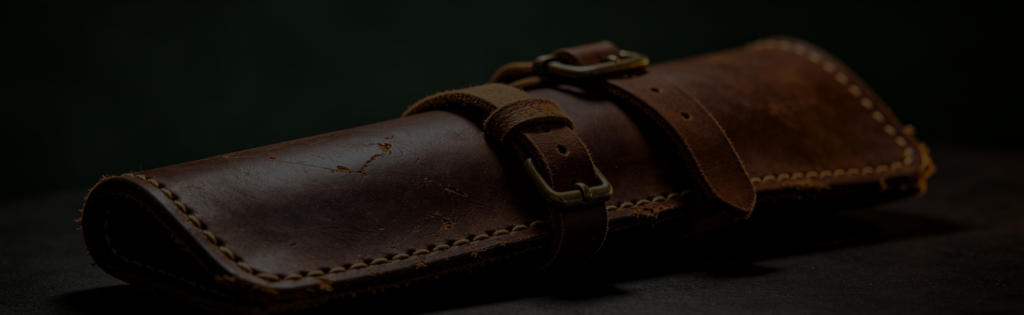
An arm guard straps to the inside of your bow arm forearm. For a target archer it protects skin from string contact; for a bowhunter its real job is compressing a jacket sleeve so loose clothing cannot catch the string. Size it to cover the area the string would cross, and go longer if you shoot in layers. Leather is durable, PU is cheap and wipes clean, mesh breathes, and fleece is the quietest for hunting. The important part: a correctly shot bow should not touch the guard at all, so repeated contact in the same spot is a form diagnostic, not a reason to buy a bigger guard.
Fletchwise guides are independent and hype-free – we are not sponsored by any archery brand.
It Does Two Different Jobs
Most guides describe an arm guard as protection and stop there. That is only half true, and the half that applies depends entirely on how you shoot.
| You are | The guard’s real job | What that means for the one you buy |
|---|---|---|
| Target archer, bare forearm | Protecting skin while you learn, and keeping a shirt cuff clear | Light and breathable is fine; you want as little bulk as possible |
| Bowhunter in layers | Compressing a jacket sleeve out of the string path | Longer, firmer fit, and quiet material – a sleeve caught by the string ruins the shot, not just the mood |
That second row is the one people miss. A hunter can have perfect form and still get the string caught, because the problem is not their arm – it is a bulky sleeve sitting where the string travels. A guard that fits tight over clothing solves it; a small target-style guard on top of a heavy jacket does not. Our hunting apparel guide covers the same layering problem from the clothing side – which fabrics stay quiet and which sleeves are worth compressing in the first place.
A Guard That Gets Hit Is Telling You Something
Here is the framing that changes how you use one: the goal is zero contact – not with your arm, and not with the guard either. A well-shot bow simply does not touch either one.
Which makes the guard a useful diagnostic. If it shows a stripe in the same place session after session, that is not the guard doing its job well. It is a mechanical fault reporting itself. Treating a bigger guard as the answer is treating the alarm rather than the fire, and it is exactly what beginners are usually told to do.
The usual cause is a locked or inward-rolled bow elbow, which puts the inside of your forearm directly in the string’s path. Draw weight that is too high makes it worse, because a bow you are fighting is a bow you cannot hold in a relaxed, rotated position.
Fixing String Slap at the Source
- Set your grip first. Hand relaxed, pressure in the web of the thumb, no gripping the riser.
- Add a few inches of tension – pull the string back slightly so the bow arm loads up.
- Rotate the elbow out and down. The forearm turns clear of the string path as a consequence. You are rotating the joint, not moving the whole arm sideways.
- Hold that rotation through the shot. Most people rotate at setup and let it collapse at full draw, which is when contact happens.
- Check your draw weight. If you cannot hold the rotation without shaking, the bow is too heavy and no amount of technique will hold it together.
Our guide to shooting a compound covers grip and bow arm in more depth. If the contact persists after the rotation is solid, have someone watch your shot rather than sizing up the guard.
If the rotation itself is consistent and correct but contact still happens, check draw length before you buy a bigger guard. A draw length set too long forces the bow shoulder and elbow into an over-extended, locked position that makes clean rotation physically difficult no matter how good your technique is – the same failure the rotation fix targets, but caused by fit rather than form. A shop measurement takes a minute and rules this out for good.
If both rotation and draw length check out and contact still happens occasionally, brace height is worth a look before you write it off as bad luck. A shorter brace height starts the string closer to your wrist and forearm at rest, which leaves a smaller margin for the small form variations every archer has – it does not cause string slap on its own, but it makes the same minor lapse in rotation more likely to end in contact. See our compound bow basics guide for how brace height trades off against speed – a more forgiving, higher-brace-height bow is a legitimate fix if you have already fixed everything else and still get occasional contact.
Leather, PU, Mesh or Fleece
- Leather – the traditional choice. Durable, stiff enough to deflect the string cleanly, ages well. Heavier and slower to dry.
- PU / synthetic – cheap, wipes clean, consistent. The default on most entry setups and perfectly adequate.
- Mesh – breathes in heat, dries fast, minimal bulk. Best for hot-weather target shooting; less protective against a hard strike.
- Fleece – the quiet option. Fleece and similar soft-faced guards make almost no noise when the string passes over them, which matters when a whole hunt depends on one shot.
Noise is the material property nobody lists on the packaging and the one hunters care about most. A stiff synthetic guard that clicks or squeaks is fine on a range and a liability in a treestand.
Sizing and Coverage
Cover the area the string would actually cross – the inside of the forearm, from just below the elbow toward the wrist. Beyond that, err longer rather than shorter, for a specific reason: your coverage needs change as draw length, anchor and clothing change. A guard that is exactly right in a t-shirt is short once you add two layers.
It should sit snug enough not to rotate on your arm when you draw. A guard that slips around is worse than none, because it moves the protected surface away from where the string goes.
Two Straps or Three
Two straps is standard and enough for most target shooting. Three straps, or a longer guard with three points of attachment, holds position better on a longer forearm and over bulky clothing – which loops back to the hunting case. If your two-strap guard rotates or rides up over a jacket, that is the fix.
When You Can Skip It
Once your elbow rotation is reliable and you shoot in short sleeves, plenty of target archers stop wearing one entirely – there is nothing left for it to protect against. Hunters generally keep wearing one regardless, because the sleeve-compression job never goes away no matter how good the form is.
New shooters should wear one. Not because it fixes anything, but because a stinging forearm on session two is the most common reason people put a bow down and never pick it up again.
If you are a coach or club handing guards to a whole beginners’ group, a shared kit bag of identical guards gets mixed up fast – see custom embroidered arm guards if putting each archer’s name on their own is worth the small extra step.
If your guard is being struck hard and repeatedly, stop and fix the bow arm before the next session. A bruised forearm heals; the flinch you build to protect it does not go away nearly as easily.
Frequently Asked Questions
Long enough to cover the inside of your forearm where the string would cross, from just below the elbow toward the wrist. If in doubt go longer – coverage needs shift with draw length, anchor and clothing, and a guard sized in a t-shirt is short once you add layers. It must be snug enough not to rotate when you draw.
Almost always a bow arm problem rather than a guard problem. A locked or inward-rolled elbow puts the inside of your forearm in the string path. Rotate the elbow out and down after setting your grip, and hold that rotation through the shot. If you cannot hold it without shaking, your draw weight is too high.
Ideally no. The goal is zero contact with either your arm or the guard – a correctly shot bow touches neither. Treat a stripe appearing in the same spot every session as a diagnostic that your elbow rotation is collapsing, not as evidence the guard is doing its job.
Usually yes. For a hunter the guard’s main job is compressing a jacket sleeve so it cannot catch the string, not protecting skin. That means longer, a firmer fit over clothing, often three straps rather than two, and a quiet material – fleece-faced guards make almost no noise when the string passes.
Leather is durable, stiff enough to deflect a strike cleanly, and lasts years, but it is heavier and slow to dry. Mesh breathes, dries fast and adds almost no bulk, which suits hot-weather target shooting, but offers less against a hard hit. For hunting, prioritize quietness over both.
The bow arm – the one holding the bow, which is your left for a right-handed archer. It goes on the inside of the forearm, the surface facing the string.
Less than with a recurve, because a compound’s shorter brace height and different geometry keep the string further from the forearm for most shooters. Beginners should still wear one while form settles, and hunters should wear one for the sleeve, regardless of bow type.
Yes, and it is easy to mistake for a technique problem. A draw length set too long forces the bow shoulder and elbow into an over-extended, locked position, which makes clean elbow rotation physically difficult no matter how good your form is. If contact keeps happening even after rotation feels solid, get your draw length measured before assuming it is still a technique issue.
Yes, as a contributing factor rather than a root cause. A lower brace height starts the string closer to your wrist and forearm at rest, leaving less margin for the small form variations every archer has – the same rotation lapse is more likely to end in contact on a low-brace-height bow than on a more forgiving one. Fix your form first; if contact still happens occasionally after rotation and draw length both check out, a higher-brace-height bow is a legitimate secondary fix.
Submit the Form to Get Our Product Catalog
What We Can Offer
- ✅ Low MOQ – from 1 piece, no minimum order
- ✅ Full customization – names, initials, club crests & team logos
- ✅ Mockup before production – see it before we make it
- ✅ Production time about 2 weeks after mockup approval
- ✅ Free remake on defects within 14 days of delivery
We reply to every inquiry within 1 business day.
Email: [email protected]
WhatsApp: +1 770 157 5807
Keep Reading
Bow Sling
Wrist, finger or braided sling styles, and why a relaxed, open hand needs one to prevent torque.
Bow SlingHip Quiver
Hip vs field quivers – which one dumps your arrows the moment you bend over, and which never does.
Hip QuiverBow Accessories Guide
The order you buy accessories in decides what you pay twice for – draw length first, stabilizer last.
Bow Accessories Guide