
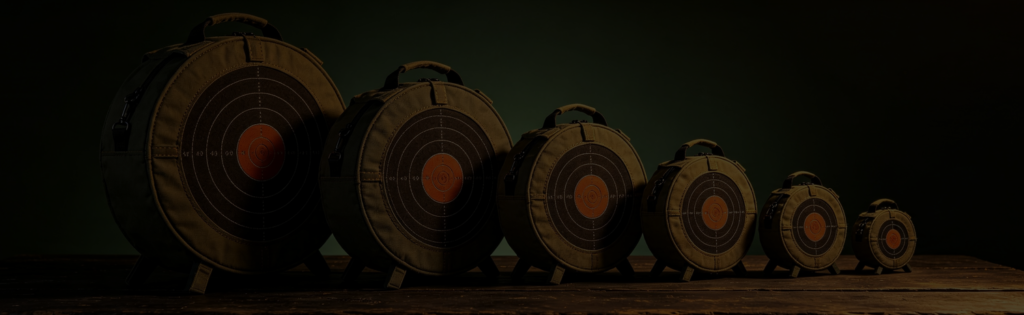
A bag target is a tough woven shell filled with synthetic fiber that stops arrows by friction along the shaft. It is the best value for high-volume field-point practice, the easiest target to pull arrows from, and the most beginner-friendly. The one hard rule: field points only – never shoot broadheads into a bag target, because the blades shred the fill. Choose a bag rated for your draw weight with a weather-resistant shell and printed aiming faces.
Fletchwise guides are independent and hype-free – we are not sponsored by any archery brand.
How Bag Targets Work
Unlike a foam target that stops the arrow tip-first, a bag target grips the entire shaft as it slides in, stopping the arrow through friction along its length. That is why arrows pull out so easily – and why bags are the favourite for shooting hundreds of arrows in a session. It is also exactly why broadheads destroy them: the blades cut through the woven fibers instead of sliding along them.
Why Bag Targets Are the Best Value
- Low cost per shot – the cheapest way to get a durable target for field-point practice.
- Effortless arrow removal – usually two fingers, even after a long session.
- High capacity – large printed faces give you lots of aiming points.
- Beginner-friendly – forgiving, simple, and hard to misuse (as long as you stick to field points).
The One Rule: Field Points Only
This is the single most important thing to know about bag targets: never shoot broadheads into one. Broadhead blades slice the woven shell and loose fill, ruining the bag fast. If you need to practice with broadheads, use a foam or layered block target instead, and keep your bag target for field points.
What Happens When the Fill Settles and How to Fix It
A bag target does not wear out the way foam does — it does not develop a soft spot in the middle. Instead, the loose fill inside gradually compacts and settles toward the bottom, leaving less material in the upper half of the bag. The target looks the same from the outside the whole time. The symptom is arrows that used to stop with plenty of shaft showing suddenly start punching deeper or passing through — but only in the upper portion of the bag, not at the bottom.
The fix is free: take the bag down, shake it hard to redistribute the fill evenly through the shell, and hang it back up. If the fill is old and has broken down into dust rather than fibrous material, that is when the bag is actually done — shaking will not revive dust. But more often than people think, a bag that “stopped working” just needs the fill shaken back into place.
If you want to extend the bag further, you can refill it. The shell usually has a zipper or opening for this, and old clothing, rags or dense plastic bags packed tight work as fill — the material matters less than the compression. Pack it firmly rather than loosely; a loose bag stops nothing.
How to Choose a Bag Target
- Match your draw weight. Most bags handle typical compound and recurve field-point practice, but check the rating for fast, high-poundage bows.
- Weather-resistant shell. A treated outer shell survives backyard sun and rain far longer.
- Multiple printed faces. Different aiming patterns on each side spread the wear and add variety.
- Carry handle. Bags get heavy – a sturdy handle makes moving and hanging it easy.
- Size. Bigger faces are more forgiving for beginners and longer practice distances.
Making a Bag Target Last
Hang it rather than stand it. A hanging bag swings slightly on impact, which absorbs a fraction of the arrow’s energy and reduces the load on the fill. It also keeps the bag face perpendicular to incoming arrows, so every shot hits square rather than at a downward angle — deflections are far more common with a standing bag, especially at close range. If you must stand it, get the centre up to chest height with a stand so you are not aiming downward.
Rotate the faces and bring it under cover between sessions. Unlike foam, a bag target’s main enemy is water — if the shell develops a tear and rain gets into the fill, the fill clumps, molds, and stops stopping. Patch small shell tears with duct tape before they become holes. Stop using the bag not when the centre feels soft (bags do not soften the way foam does) but when shaking the fill no longer restores the stopping power — that means the material inside has broken down past the point of doing its job.
Weather-Resistant Is Not the Same as Waterproof
A treated shell slows how fast a bag target absorbs moisture, but it does not seal it. Left outside through sustained rain, water works into the weave even on an intact bag with no visible tear, and once the fill gets wet it does not just clump and lose stopping power – it can mold and start to smell, at which point the bag is usually done for good rather than fixable by drying it out.
Treat “weather-resistant” as buying time, not exemption: bring the bag under cover before a multi-day forecast, not just after you notice a tear. A tarp over a hanging bag, or moving it into a shed or garage between sessions, does more for lifespan than the shell rating alone.
Specific bag-target picks are coming as our shop launches. For now, choose a weather-resistant bag with multiple faces rated for your bow, and reserve it strictly for field points.
Frequently Asked Questions
Bag targets stop arrows by friction along the shaft through woven fibers and loose fill. Broadhead blades cut those fibers instead of sliding through them, destroying the bag quickly. Use a foam or block target for broadheads.
Yes – they are the best beginner target. They are inexpensive, arrows pull out easily, and they handle high-volume field-point practice, which is exactly what new archers need to build form.
A quality bag shot regularly with field points can last one to two years or more. Rotating faces, hanging it square, and storing it out of the weather all extend its life.
Yes, most bag targets handle field points from typical compound bows. For very fast, high-poundage setups, check that the bag is rated for it – otherwise step up to a high-density block.
The fill has settled. Over time, the loose synthetic material inside compacts and sinks toward the bottom, leaving less stopping material in the upper half. Take the bag down, shake it hard to redistribute the fill evenly, and hang it back up — this fixes the problem far more often than replacing the target. If shaking does not help, the fill has broken down into dust and the bag is finished.
Hang it if you can. A hanging bag swings slightly on impact, absorbing a bit of the arrow’s energy, and it keeps the face square to incoming shots. A bag standing on the ground forces you to aim downward, which changes your form and increases deflections at close range. If standing is your only option, use a stand to get the centre to roughly chest height.
Not safely long-term, even with a weather-resistant shell. That rating slows moisture absorption, it does not seal the fabric, and sustained rain will work into the weave on a bag with no tear at all. Once the fill gets wet it can mold and start to smell rather than just clump, and a moldy bag is usually done for good. Bring it under cover before a multi-day forecast rather than waiting until it looks damaged.
Submit the Form to Get Our Product Catalog
What We Can Offer
- ✅ Low MOQ – from 1 piece, no minimum order
- ✅ Full customization – names, initials, club crests & team logos
- ✅ Mockup before production – see it before we make it
- ✅ Production time about 2 weeks after mockup approval
- ✅ Free remake on defects within 14 days of delivery
We reply to every inquiry within 1 business day.
Email: [email protected]
WhatsApp: +1 770 157 5807
Keep Reading
Best Block Targets
How open-layer foam actually stops and releases an arrow, and why rotating faces matters more than the price tag.
Best Block TargetsBest Archery Targets
How to pick between bag, foam, layered and 3D targets by draw weight, broadheads, and how often you will move it.
Best Archery TargetsArchery Targets: Full Guide
All four target types compared – bag, foam, layered and 3D – matched to your draw weight and broadhead use.
Archery Targets: Full Guide