
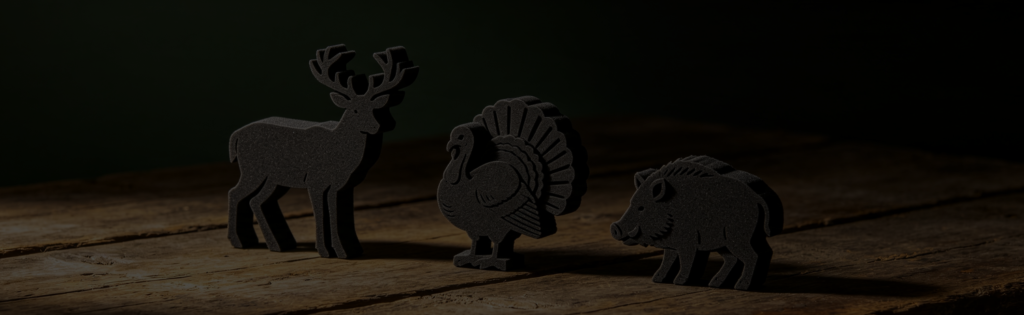
A 3D archery target is a life-size foam animal with hidden scoring rings in the vital zone, built for realistic bowhunting practice and 3D archery courses. The best ones use self-healing foam, a replaceable vital-zone core, and are rated for broadheads. Deer targets are the most popular all-rounder; turkey and hog targets add species-specific practice. Expect to pay more than for a block target, but a quality 3D target lasts three to five years.
Fletchwise guides are independent and hype-free – we are not sponsored by any archery brand.
Why Shoot a 3D Target?
Flat targets teach form. 3D targets teach hunting. Because the scoring rings are hidden inside a realistic animal shape, you have to read the body, estimate the range, and consciously pick a spot – exactly what you do in the field. That transfer is why nearly every serious bowhunter and every 3D archery course relies on them. Even pure target archers use 3D targets to break the monotony of shooting at a flat face.
What to Look For in a 3D Target
Self-Healing Foam Is Not the Real Story
Every listing mentions self-healing foam, and it is worth being precise about what that phrase actually means. It describes closed-cell foam that grips an arrow shaft on impact and mostly closes around field points – it does not mean the foam is immune to wear, and it does not undo what a broadhead does. A broadhead’s blades cut the foam rather than just parting it, and that cut never closes. Count broadheads through the vital zone, not arrows, when you are judging how much life a target has left – the full mechanics of why are in our foam target guide.
Replaceable Vital-Zone Core
The center of the target – where every arrow lands – wears out first, and it wears out from broadhead cuts specifically, not raw shot count. The best 3D targets let you pull and replace just the vital-zone insert instead of buying a whole new target, and doing that typically costs somewhere around a quarter of a full replacement target – confirm replacement cores are sold for the model before you buy.
Do not assume that confirmation carries across a brand’s whole lineup. It is common for a manufacturer’s deer model to have a replaceable core while a bear, hog or turkey model in a similar price range from the same brand has none at all, because a smaller or oddly shaped vital zone does not always suit a swappable insert. Check the specific model, not the brand, before you buy.
Broadhead Rating
If you tune broadheads, make sure the target is rated for them. Many archers practice field points into the body and save the replaceable core for broadhead checks to extend target life. For the full rundown on FPS ratings and which target types actually handle broadheads, see our broadhead target guide.
Weather Resistance & Weight
Outdoor 3D targets should resist UV and moisture. If you carry the target to a course or move it often, check the weight and whether it has a handle or stake points to keep it upright.
The Scoring Rings Reward One Shot, Not the Whole Vital Zone
Most pages describe the hidden rings as marking the vital zone and leave it there. That undersells what they are actually doing. On an ASA target, the outer ring covers a wide oval approximating the whole heart-lung-liver area, worth 8 points – but a much smaller circle inside it, worth 10, is what everyone is really aiming for. On an IBO target, the pattern repeats one layer deeper: the 10-ring sits centred inside the vital area, and inside that again is a ring roughly a quarter the size of the 10-ring for the maximum score.
That nested structure is not arbitrary difficulty – the small centre ring is placed to reward a very specific outcome: a double-lung hit, the shot with the highest kill probability and the widest margin for a placement error either side of it. Score committees are not making the ring small to punish you; they are training you toward the one shot that forgives a slight miss in any direction and still kills cleanly. Miss the 10 low and you are typically still on a heart hit; miss it high and you are still in a lung. That is the actual skill 3D archery is built to teach, and it is why the practice transfers to the field better than most target faces: you are not just learning to hit a spot, you are learning which spot to choose.
Which Animal Target Should You Buy?
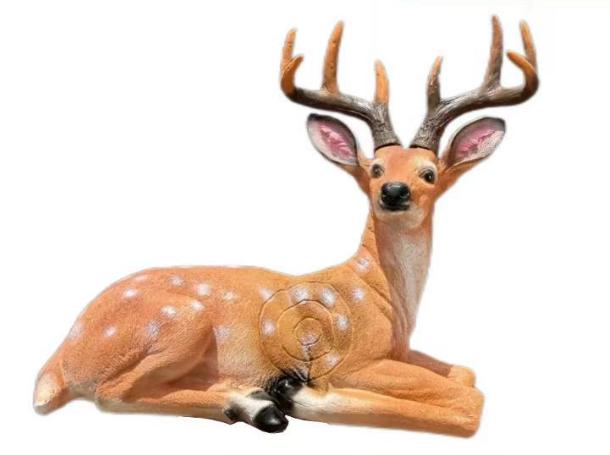
- Deer – the default first 3D target. Realistic vitals, useful for the most common bowhunting scenario, and the easiest to find replacement cores for.
- Turkey – a smaller vital zone that sharpens precision and is ideal if you hunt spring gobblers.
- Hog – a low, angled vital zone that trains shot placement on a tough, dense-bodied animal.
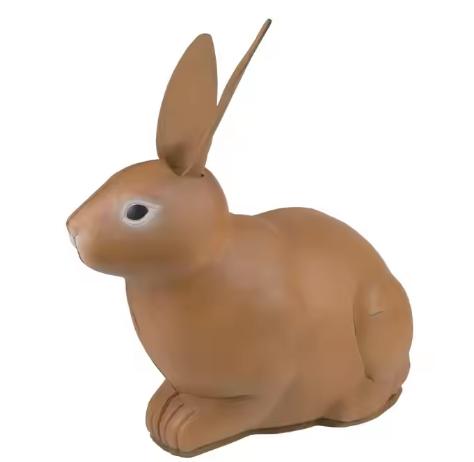
- Small game (rabbit, raccoon, etc.) – inexpensive, fun, and great for fast, instinctive close-range practice.
Getting the Most Life From a 3D Target
Rotate your aiming point slightly so you are not stacking every arrow in the exact same hole. Pull arrows straight, with a twist and an arrow puller if needed, to avoid tearing the foam. Store the target out of direct sun and rain when you are done, and replace the vital core the moment it starts failing to stop arrows – one pass-through can damage whatever is behind it.
You Do Not Need a Multi-Target Course to Practice Range
Most 3D buying guides move straight from “buy a target” to “build a course” – understandably, since the companies writing them sell more targets that way. The actual training principle is simpler and works with a single target: shoot from unmarked, unmemorized distances so you have to judge range each time instead of grooving a number you already know. One target moved to a new, unmeasured spot every session – mixing it up somewhere between 10 and 60 yards – delivers most of the range-estimation benefit of a five-target course. It just takes your own discipline to vary the placement instead of walking a fixed layout.
If you do add targets later, keep at least 10-15 yards between stations so arrows in flight cannot cross lanes, and vary angle as well as distance – a target set slightly quartering away, or shot from a raised platform, trains shot angles that a flat, square-on distance change cannot. But a single target and real discipline about not re-shooting a measured spot twice teaches the core skill just as well as a course costs to build.
Frequently Asked Questions
With a replaceable vital core and proper storage, a quality 3D target lasts three to five years of regular use. The body holds up far longer than the vital zone, which is why replaceable cores matter so much.
Yes, if the target is rated for broadheads. To extend life, many archers shoot field points into the body for general practice and reserve the replaceable vital core for broadhead tuning.
They are great for building real-world skill, but beginners may find the hidden scoring rings frustrating before their groups tighten. A simple bag or block target is cheaper for high-volume form practice; add a 3D target once you are grouping consistently.
A deer target. It covers the most common hunting scenario, has a forgiving vital zone for learning, and almost always has replacement cores available.
Use the built-in stake points or a target stand, and place it on level ground. For windy spots, stake the legs and back it against a natural backstop in case of a miss.
Not exactly – it marks the shot with the best margin for error, not the anatomical outline of the vitals. On ASA and IBO targets the small centre ring is placed to reward a double-lung hit, since that shot forgives a slight miss high or low and still kills cleanly. The wider ring around it approximates the full heart-lung-liver area at a lower score. Aim for the small ring; missing it slightly in either direction is the point of where it is placed.
No. Self-healing describes closed-cell foam that grips a field point and mostly closes around it – it does not undo what a broadhead does. Broadhead blades cut the foam rather than parting it, and those cuts are permanent. Judge a target’s remaining life by broadheads through the vital zone, not total arrow count, and budget for a replacement core – typically around a quarter the cost of a new target – well before the body itself gives out.
Not necessarily. It is common for a manufacturer’s deer model to have a replaceable core while a bear, hog or turkey model at a similar price point has none, because a smaller or oddly shaped vital zone does not always suit a swappable insert. Check the specific model you are buying rather than assuming a feature carries across the whole lineup.
No. The training principle is unmarked, unmemorized distance – not the number of targets. Moving a single target to a new, unmeasured spot each session delivers most of the same range-judgment benefit as a multi-target course; you just have to enforce the variation yourself instead of walking a fixed layout. If you add targets later, space stations at least 10-15 yards apart so arrows cannot cross lanes, and vary angle as well as distance.
Submit the Form to Get Our Product Catalog
What We Can Offer
- ✅ Low MOQ – from 1 piece, no minimum order
- ✅ Full customization – names, initials, club crests & team logos
- ✅ Mockup before production – see it before we make it
- ✅ Production time about 2 weeks after mockup approval
- ✅ Free remake on defects within 14 days of delivery
We reply to every inquiry within 1 business day.
Email: [email protected]
WhatsApp: +1 770 157 5807
Keep Reading
Archery Targets: Full Guide
All four target types compared – bag, foam, layered and 3D – matched to your draw weight and broadhead use.
Archery Targets: Full GuideBest Foam Archery Targets
Density and depth decide real lifespan far more than price, and how to judge a block before it is shot out.
Best Foam Archery TargetsDIY Archery Target
Build a target from stacked, compressed cardboard for a fraction of retail – plus the grain-direction detail most guides skip.
DIY Archery Target